
Winter Collage Challenge: Reignite Your Creativity During the Cold Season
Winter has a way of quietly reshaping our creative rhythms. The days grow shorter, the light softens, and the world outside seems to slow to a hush. For many creatives, this shift brings mixed emotions. There’s comfort in the stillness, but also frustration when inspiration doesn’t arrive as easily as it does in brighter seasons.
If you’ve felt creatively stuck, disconnected, or simply uninspired lately, you’re not alone. Winter often asks us to move inward, even when the creative world tells us to keep producing, posting, and performing. That tension can make creativity feel heavy instead of joyful.
That’s exactly why this week’s Monday Prompt is intentionally simple, open, and forgiving: create a winter-themed collage. I went first, and now it’s your turn.
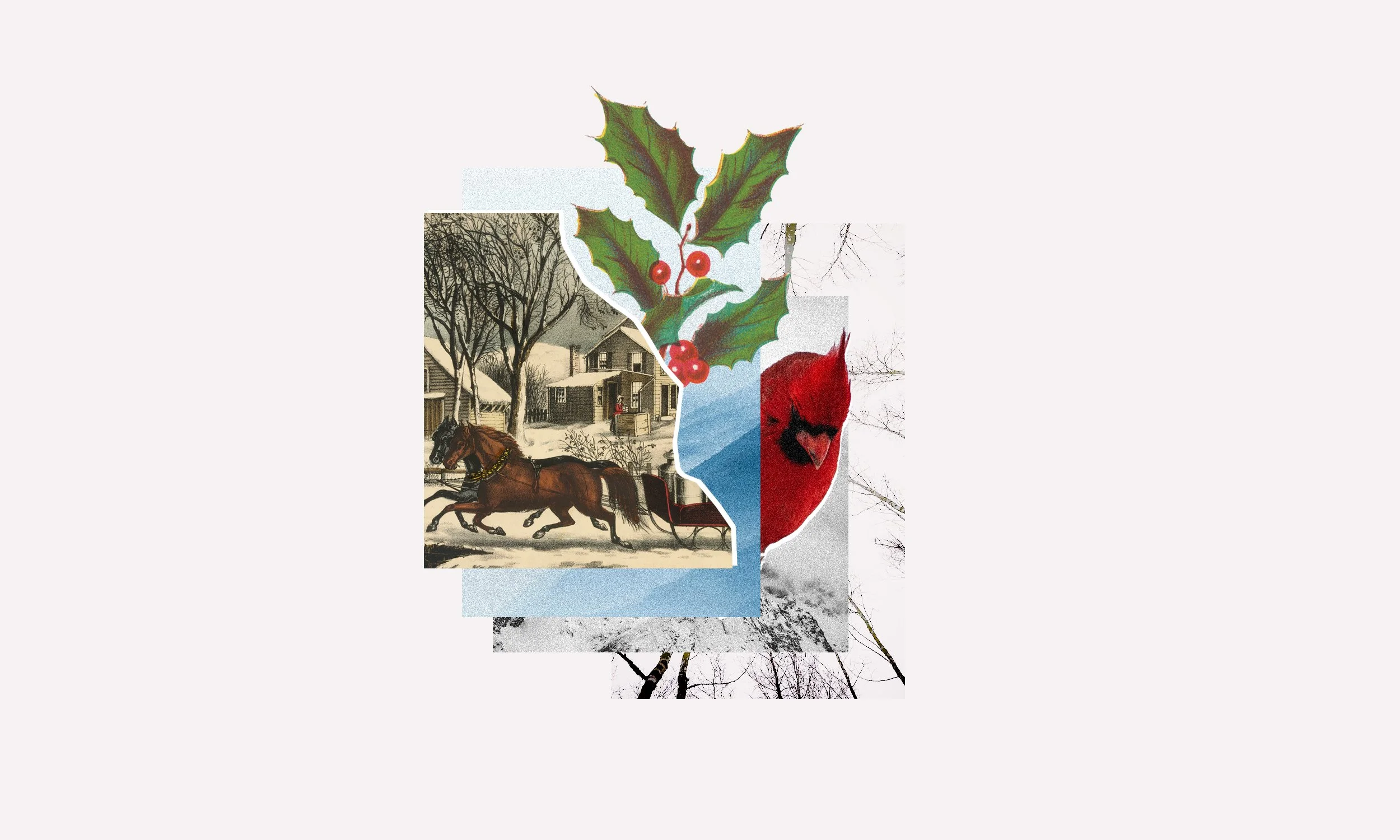
Collage is not about mastery or perfection. It’s about gathering fragments, responding intuitively, and allowing meaning to emerge slowly. In a season defined by layers—coats, fog, snowfall, bare branches—collage becomes a natural creative companion. It mirrors winter’s textures and moods while giving you permission to create without pressure.
This prompt isn’t about building a portfolio piece or creating content for engagement. It’s about staying connected to your creativity during a season that often challenges it.
Why Winter Often Feels Creatively Heavy
Winter has a different emotional weight than other seasons. The lack of daylight, colder temperatures, and quieter routines subtly affect energy and motivation. Even the most disciplined creatives can feel their momentum slow down.
There’s also an invisible pressure that comes with the start of a new year. New goals. New expectations. New timelines. We’re told it’s time to push forward, improve, and make progress—yet winter itself encourages rest and reflection.
For creatives, that contradiction can feel paralyzing.
You may want to create, but not know what to make. You may feel inspired internally, but struggle to translate that feeling into work. Or you may simply feel tired of producing things that need to be “useful.”
Collage offers a way through that tension. It doesn’t ask you to invent something from nothing. It asks you to notice, select, and assemble. It’s an act of response rather than force.
Why Collage Is the Perfect Winter Creative Practice
Collage thrives on fragments, and winter is full of them.
Muted colors. Soft light. Harsh shadows. Quiet landscapes. Fleeting moments of warmth. Collage allows you to collect these visual cues and respond to them without needing to explain or resolve them.
Unlike illustration, logo design, or even photography, collage doesn’t demand clarity upfront. You don’t need a concept before you begin. You discover the concept through the act of making.
That’s especially powerful in winter, when ideas often arrive slowly and emotionally rather than logically.
Collage also removes the fear of the blank page. You’re never starting from nothing—you’re starting from something that already exists. That simple shift lowers resistance and makes it easier to begin.
For designers, collage can be a way to reconnect with intuition after months of structured problem-solving. For artists, it can be a way to create without overthinking technique. For anyone feeling creatively stuck, it’s a reminder that creativity doesn’t need perfect conditions to exist.
Letting Winter Define the Mood, Not the Rules
A winter collage doesn’t need to look a certain way to “count.”
It doesn’t need snowflakes, pine trees, or icy landscapes. Winter can show up in subtler forms: desaturated color palettes, foggy textures, negative space, worn paper edges, or quiet compositions.
Think about what winter feels like to you.
Maybe it’s calm and minimal. Maybe it’s isolating. Maybe it’s cozy and introspective. Maybe it’s chaotic in a quiet way. All of that belongs in your collage.
Some winter collages feel almost empty, with space doing as much work as imagery. Others are dense and layered, reflecting the mental clutter that often builds up during colder months. Neither approach is more “correct” than the other.
The goal isn’t to illustrate winter. It’s to respond to it.
Starting Without a Plan (and Why That Matters)
One of the hardest habits for creatives to break is the need to know the outcome before starting. We want reassurance that the work will be good, useful, or worth the time.
This prompt asks you to let go of that.
Begin without a plan. Choose images, textures, or shapes that simply feel right. Place them without justification. Respond to what’s already on the page instead of worrying about where it’s going.
Collage works best when it becomes a conversation rather than a command.
If you’re working digitally, experiment freely. Lower opacity. Try blending modes. Add grain. Let layers partially disappear into one another. Winter is a season of subtlety, and digital collage gives you endless ways to explore it.
If you’re working with physical materials, embrace imperfection. Uneven cuts, torn edges, visible glue—these details add warmth and humanity. They remind us that something was made by hand, slowly, intentionally.
As you build, notice when something surprises you. That moment—when an unexpected combination suddenly feels right—is often where creativity quietly reawakens.
Collage as a Form of Visual Journaling
A winter collage doesn’t have to tell a clear story, but it often reveals one anyway.
As you work, patterns may emerge. Certain colors repeat. Certain themes surface. You may notice yourself drawn to isolation, stillness, or contrast between warmth and cold. These aren’t accidents—they’re reflections.
In that way, collage becomes a form of visual journaling.
You’re recording how the season feels, not how it looks. You’re capturing an emotional snapshot rather than a literal one. And unlike words, collage allows ambiguity to exist without explanation.
This is especially valuable in winter, when emotions can feel layered and difficult to articulate. Collage gives those feelings a place to land without forcing them into clarity.
Creativity Without Performance
One of the most important aspects of this prompt is removing performance from the process.
You are not creating to impress anyone.
You are not creating to optimize engagement.
You are not creating to prove productivity.
You are creating to stay connected.
In a culture that constantly asks creatives to monetize, share, and scale their work, winter can feel like a failure if output slows down. But creativity isn’t linear. It’s seasonal.
Personal creative practices—like collage—build resilience. They keep your visual instincts sharp even when client work is slow or uninspiring. They remind you why you started creating in the first place.
Many designers and artists underestimate how much this kind of exploratory work feeds professional growth. But often, the strongest ideas don’t come from pressure—they come from play.
Letting Slowness Be Part of the Process
Winter invites slowness, whether we accept it or not. Fighting that reality often leads to burnout. Working with it can lead to deeper, more meaningful creative work.
Collage allows you to move slowly without feeling unproductive. Each layer is a small decision. Each adjustment is a moment of attention. There’s no rush to finish.
You can step away and come back. You can sit with the work unfinished. You can let it evolve over days instead of hours.
That pacing matters.
Creativity doesn’t always need momentum. Sometimes it needs patience.
Sharing Your Winter Collage (Or Keeping It Private)
If you feel moved to share your winter collage, do so on your own terms. Share it as exploration, not a finished product. A simple reflection on what the process felt like can be more meaningful than a polished caption.
And if you don’t share it at all, that’s just as valid.
Not all creative work needs an audience. Some pieces exist simply to keep you company during a quiet season. They still serve a purpose.
A Gentle Creative Invitation
This winter collage prompt isn’t a challenge to push harder. It’s an invitation to soften.
To create without pressure.
To explore without expectation.
To stay connected to your creativity when the season makes that difficult.
Open a canvas. Gather fragments. Let winter show up however it wants to. There’s no right outcome—only the act of making. Creativity doesn’t disappear in winter. It just speaks more quietly. Sometimes, all it needs is the space to be heard.